MIZO HILLS OF THE 70s
🤔
🪖
PONDERINGS OF A PONGO 🪖 🤔
(Some friendships
are forged in the most unlikely of places. And sometimes, they prove more
powerful than the weapons we carry.)

Induction to Lushai Hills
On commissioning
my first posting was to Mizoram, Lushai Hills. More than half a century has
passed, yet I can still feel the burning in my calves whenever I recall that
final, punishing ascent. Four days of trudging through leech-infested bamboo
jungles, with the ever-present possibility of an insurgent encounter, had
finally brought us to Champhai. We staggered through what passed for a 'welcome
arch' at the battalion location, perched along the helipad contour.
It was hardly
the grand reception one might have expected, but after that arduous trek, even
this modest gateway looked welcoming!
Champhai occupied
the highest ridge in the area, with its Protected Progressive Village (PPV)
spread across the slopes like a precarious chessboard of civilisation amidst an
otherwise untamed wilderness.
The helipad
remains etched in my memory, as does the solitary jeep track winding down
towards the Inspection Bungalow (IB), passing through the famous Burmese Open
Market. It was a colourful sensory
extravaganza, displaying an assortment of merchandise ranging from Burmese
bamboo parasols, sarongs, cigars and hats to more adventurous delicacies such
as smoked bandicoots and edible maggots. A gourmet's paradise, perhaps, though
one requiring a considerable suspension of culinary inhibitions!
The Inspection
Bungalow was our administrative and residential hub. It accommodated the
Officers' Mess and the residences of the Commanding Officer (CO),
Second-in-Command, Adjutant and Medical Officer. In keeping with the Army's
irreverent sense of humour, we had our own little menagerie: the Tiger (CO) 🐅,
the Lamb (Second-in-Command) 🐑, the Lion (Adjutant) 🦁
and the Sheep (Medical Officer). Each, I must say, appeared quite comfortable
in his designated animal kingdom!
Further down the track lay the Dropping Zone (DZ), our lifeline to the outside world. Supplies arrived periodically from the skies, courtesy of a vintage Dakota, a veteran of World War II. Its cargo included rations, ammunition, liquor (sometimes arriving with a parachute of its own!) and, most importantly, MoH - Meat on Hoof. Live goats would descend under parachutes, bleating indignantly all the way down, apparently unaware that their airborne adventure was merely a prelude to a less exciting destiny!

Champhai had only
one four-wheeled wonder - a Willys Jeep. Its journey to the hills was an
engineering feat in itself. Dismantled at the Motor Transport Park in Lyallpur,
it had been transported - hump backed- piece by piece through the unforgiving
bamboo jungles and painstakingly reassembled at Champhai.
This solitary
mechanical marvel would then ferry our Tiger through the Burmese Bazaar,
attracting considerable curiosity. To the villagers, it must have seemed that
the Army had somehow manufactured a motor vehicle out of a giant jigsaw puzzle!
But beyond these
peculiarities of life in a remote counter-insurgency location, something far
more enduring was beginning to take shape in my own life.
I was then a
newly commissioned young officer, barely out of adolescence, wearing a single
star on my shoulder. It looked rather modest, but I had already discovered that
the responsibilities attached to it were considerably heavier!
Initiation to the Battalion
My initiation
into the battalion had followed the traditional route of learning soldiering
from the ground up. I had lived with the men, familiarised myself with the ways
of the Sardars (Junior Commissioned Officers), attended the Umedwar Cadre
alongside the troops, sans stars on the shoulders, and gradually found my feet
in the regimental environment. Only after this initiation was, I formally
introduced to the Officers' Mess.
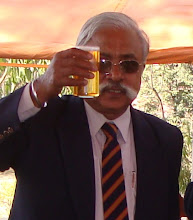
My dining-in
ceremony was conducted in the finest traditions of the Battalion. The
ceremonial toast was served in the Warwickshire silver trophy, specially
reappropriated for the occasion as my personal goblet. The contents were
another matter altogether - an unholy cocktail of every brand of liquor
available in the Officers’ Mess bar, all generously blended into one formidable
concoction! By the way the Battalion had returned from United Nations Emergency
Force assignment at Gaza (Isreal) and hence had certain exquisite liquor,
liqueur and alien spirits! That didn’t make a difference to me as I was a
teetotaller till then.
The ritual
required me to raise this magnificent goblet, grasping it firmly in both hands,
propose a solemn toast to the Battalion and drain the contents in one
uninterrupted gulp.
One can well
imagine the predicament of a confirmed teetotaller, who had not yet graduated
to the exalted fraternity of drinkers, suddenly confronted with such a baptism
by fire - or, more appropriately, by liquor!
I survived the
ordeal, though not without considerable wobbling. It took me a full two days of
enforced recuperation to regain my bearings and return to the land of the
living.
But the mission
had been accomplished! I had upheld the Regimental tradition, drained the
goblet without surrendering, and, at least for the record, demonstrated that I
was every bit as manly as the rest of the fraternity.
The Battalion had
its toast; I had my two-day hangover - and my manhood, officially certified!
My Appointment
A few weeks into
my appointment as Intelligence Officer, and having begun to understand the
nuances of the job, I was posted to Vanzau, a good eight hours away from
Battalion Headquarters. I was placed under the command of Major O.K. Verma , the seasoned Delta Company Commander.
Induction to Vanzau
My association
with Major Okay proved an invaluable learning experience. He was a thorough
gentleman and a professional soldier to the core. His guidance and mentoring
helped hone my skills and confidence. When he subsequently proceeded on a
course and leave, I was entrusted with the responsibility of commanding the
post for a few months, pending the arrival of his replacement.
Vanzau itself was
a Protected Progressive Village (PPV), comprising five villages that had been
displaced and subsequently resettled under a common administrative arrangement.
My responsibilities soon settled into a demanding operational routine - regular
patrolling, and planning and executing ambushes at strategic points: the passes
leading into and out of the Vanzau Valley, as well as prominent track junctions
within my area of responsibility. These operations were mounted at
unpredictable intervals, often under the cover of night and during curfew
hours.
My Commanding
Officer was a strict disciplinarian who, through his directions to all Company
Commanders, laid particular emphasis on probity and impeccable conduct in
dealing with the local population, especially its womenfolk. That emphasis
became a guiding principle for me as Post Commander. I made it a point to
constantly impress upon my men the need to maintain a respectful distance from
local women and, above all, to treat them as they would the womenfolk of their
own villages back in Punjab - with dignity, consideration and sensitivity. Vigilance,
however, should not become a casualty in the bargain. We had to remain mindful
of what people carried, and occasional searches were unavoidable. But these had
to be conducted with tact, humility and utmost courtesy, without ever
compromising the dignity of the women concerned.
My Sardars -
platoon commanders- were a pious, mature and seasoned lot. They understood that
military discipline was not confined to obedience to orders; it extended
equally to personal conduct, self-restraint and respect for the local populace.
They upheld these values admirably. By God's grace, there was never a single
untoward incident during our tenure.

Khabung
Khabung, a
security post located about three hours away, was perhaps the most beautiful
and relatively well-developed PPV under Vanzau Company's operational
responsibility. As the Operational Commander, I particularly enjoyed my visits
there. The post was manned by a platoon of the Central Reserve Police (CRP),
commanded by Inspector Rajaretinam from Trivandrum - a well-educated, affable
gentleman who had established an excellent rapport with the local population.
During my visits, I also struck up close friendships with two schoolteachers
from Aizawl.
A visit to
Khabung was always a welcome change from the monotony of life at Vanzau. It
offered not merely a change of scenery but also some pleasant company -
something I particularly cherished, being the only ‘Mona’ (non-Sikh) in an
otherwise all-Sikh post. Those visits were, in their own way, refreshing
interludes in the otherwise routine and somewhat insular life at Vanzau.

Reconnaissance through Bamboos
One of the
reconnaissance patrols from those days remains particularly vivid in my memory.
Acting on
intelligence inputs received at Battalion Headquarters; we were tasked to
investigate reports of insurgent activity in some of the old village
settlements. These were abandoned sites from where the original inhabitants had
been displaced to Protected and Progressive Villages (PPVs) in the wake of the
insurgency. There were indications that insurgents were frequenting these
deserted settlements.
Our mission was
straightforward, at least on paper: recce the abandoned villages, verify the
intelligence, and, if fortune brought us face to face with the militants,
engage and eliminate them. The patrol was planned for four days.
We combed through
the deserted settlements, examining dilapidated huts, isolated churches and
other signs of habitation. At night, we camped wherever the terrain offered
some degree of comfort and tactical advantage.
But the jungle had its own surprises in store.
Among the most
delightful discoveries were the old pear orchards. The trees were laden with
ripe fruits, seemingly waiting for someone to come and claim them. We needed
little persuasion! We ate to our hearts' content and stuffed our haversacks
with as many pears as we could possibly carry. Little did we realise how
providential that little indulgence would prove.
The real ordeal
began on our return journey.
We entered an
almost impenetrable bamboo forest. What followed was less a march and more a
battle of attrition against the vegetation. We had to hack our way through the
dense growth, one bamboo stem at a time, with no clear end to the green
labyrinth in sight.

The leeches and
other jungle insects were having a field day at our expense. Despite the
precautions, several men were suffering severe leech bites, with some showing
signs of considerable blood loss.
I too had my own
unpleasant encounter. Despite my puttees securing my boots and trousers, a
particularly enterprising tiger leech had managed to find its way up to my
thigh. I became aware of its presence only when I noticed something unusually
thick protruding from beneath my trousers.
On extracting the
unwelcome guest, I discovered a gaping wound from which blood was flowing
freely. Experience, however, had taught me a rather unconventional jungle
remedy. I took out my cigarettes, lit two at a time and puffed away until I had
accumulated sufficient ash. I then packed the wound with it. The bleeding soon
stopped. A rather primitive field dressing, perhaps, but in the middle of a
bamboo jungle, one learnt to improvise!
Every man in the
patrol carried another ingenious piece of jungle equipment: a thin bamboo stick
with a small cotton pouch of salt tied to its tip. The man at the rear would
attend to the leeches on the body of the man ahead, touching them with the
salt-tipped stick until they loosened their grip. It was an unusual chain of
mutual assistance, with each soldier looking after the man in front of him!
Eventually, we
came upon a small clearing. Darkness was fast approaching, and pressing on
through the bamboo jungle would have been foolhardy. We decided to halt and
camp for the night.
Our carried
rations were almost exhausted. Fortunately, those pear orchards we had raided
earlier now came to our rescue. The fruits that had seemed such a welcome
luxury when we collected them had turned into our survival ration. We thanked
our stars for that little act of foresight!
The following
morning, we resumed our struggle through the bamboo thicket, hacking our way
forward and constantly checking our direction with the compass. Progress was
painfully slow. By afternoon, however, the seemingly endless green wall finally
gave way, and we emerged into an old, abandoned jhoom (shifting cultivation)
field.
The fields lay
barren and overgrown. For a moment, there was little to suggest that this
desolate patch of land had anything to offer a hungry patrol.
Then came another
unexpected discovery!
Scattered among
the tall grass and weeds were some large, golden-coloured objects. On closer
inspection, they turned out to be enormous pumpkins, fully ripe and dried by
the sun, apparently left behind after the last cultivation.
It was nothing
short of a culinary windfall!
We halted
immediately. The men gathered around the pumpkins, cut them open and discovered
the rich, deep-orange flesh inside. What followed was a scene of unrestrained
delight.
My men scooped
out the pumpkin flesh and set about preparing some improvised jungle
concoction. I cannot recall the exact recipe, nor would any gourmet have cared
to ask! But to a bunch of hungry soldiers who had spent the better part of two
days hacking through bamboo and feeding on pears, it tasted nothing short of
nectar.
We ate our fill,
and spirits rose dramatically. The map indicated that Vanzau was barely five
kilometres away.
Replenished by
our unexpected pumpkin feast, we gathered our equipment and pushed on with
renewed vigour. The remaining distance was covered with an enthusiasm that
would have surprised anyone who had witnessed our weary, leech-bitten selves a
few hours earlier.
We reached Vanzau
before sunset. God had indeed been kind 🙏
Winning Hearts & Minds
Equally
important, however, was another dimension of my assignment - fraternisation
with the local population, building trust, establishing rapport and winning
hearts and minds.
My posting there
brought me into close and continuous contact with the local population - an
association that would leave an indelible impression on me.
A Young Kaptan Finds His Feet in YMA
As was customary,
the Young Mizo Association (YMA) took me under its wing. As a freshly arrived
talangwal (young man or Gen C), I was bestowed with the rather intriguing
sobriquet 'Kaptan Zua' - Captain Wild
Rose ( Kaptan means an officer and I was a raw 2nd Lieutenant only). It was an
affectionate introduction into a society whose warmth I was soon to discover.
My initiation
into local customs was equally interesting. I learnt to roll and seal crude
cigarettes made from locally grown tobacco, using the thin onion-paper pages of
little booklets distributed by well-meaning pastors.

At YMA
gatherings, while occupying the place of honour on an upturned wooden soapbox,
I would invariably be offered one of these hand-rolled cigarettes by a noola
(young village girl). The ritual was complete only after it had been lit with a
puff and I had taken a ceremonial drag. Then followed one too many! One had to
respect local protocol, even if one's smoking credentials were still very much
under development!

I was equally
fascinated by the attire of the young men and women who attended these
gatherings. The talangwals sported flamboyant cowboy hats, fashionable
bell-bottom jeans and chequered shirts with oversized collars. The noolas wore
colourful shawls, fashioned into skirts and other garments.
There were no
children or elderly folk at these gatherings; the congregation was very much a
young people's affair. The young men arrived with guitar-like instruments,
locally known as 'Ting Tang', and displayed remarkable proficiency in playing
them. The girls, on the other hand, seemed to have little need for lipstick -
perhaps it was not readily available, or perhaps their natural charm made such
embellishments quite superfluous!

The Noolas were
accomplished bamboo dancers, and their performances, accompanied by songs and
the lively strains of the Ting Tang, formed the centrepiece of the evening's
entertainment. Their musical repertoire was not confined to local folk songs
either. They even ventured into Jim Reeves and Elvis Presley, rendering their
favourites in their own delightfully improvised style. The spirit was
infectious, if not always faithful to the original compositions!
There were also
the customary long-drawn speeches in Lushai, warmly welcoming me and inviting
me to become one of their own. Though I could hardly follow a word, the warmth
and enthusiasm needed no translation.
Hospitality came
in generous measure, too, in the form of an uninterrupted supply of 'Rakshi',
the local rice beer. I had thoughtfully carried two bottles of rum as my
contribution to the festivities, but I have a lingering suspicion that the
organisers quietly appropriated them for their own private enjoyment!
Interestingly,
there was not a pastor or clergyman in sight. Perhaps their absence lent the
gathering a certain freedom, allowing the youngsters to sing, dance and make
merry without the watchful eye of ecclesiastical propriety. For one evening, at
least, the village seemed determined to let its hair down!

I later learnt
that much of their colourful attire was painstakingly hand-sewn. Even the Ting
Tangs were handmade - a delightful example of local craftsmanship and youthful
ingenuity.
The YMA
gatherings were particularly significant during those curfew-bound days. They
provided opportunities for the talangwals and noolas to meet during their
Noola-rim (courtship) sojourns, and everyone naturally turned up in their best.
Noola-rim
was a socially accepted and recognised prelude to formal marriage. It was
considered an essential stage in courtship rather than a social taboo. There
were, of course, traditional safeguards and community obligations. Any untoward
consequences before marriage attracted a substantial fine for the young man,
while the village council assumed responsibility for the welfare of the
offspring.
It was a social
arrangement quite different from what I had grown up with, and I found it
fascinating to observe how village customs governed relationships and community
responsibilities.
A Cup of Thing Pui and the Language Lesson
I soon discovered
that the easiest way to become acquainted with a village was not through
official meetings or security briefings, but through its children.
They began
visiting me in groups, and I would offer them thing Pui - tea. They explained that 'thing' meant wood
and 'pui' meant water; hence, thing Pui, literally 'wood water', was tea. A
wonderfully uncomplicated explanation for something that had become an
indispensable part of our daily lives!
I made a modest
attempt to learn Lushai, beginning with a handful of everyday expressions ' -
Kapu /Kapi Cheebai (greetings), Kapa (father), Kannu (mother), talangwal (youngman), noola (young girl), minpero (give me), kalawme (thank you), mangtha (good) and a few others.
My vocabulary was rudimentary, my pronunciation probably atrocious, but the
children were wonderfully patient. Before long, I was attempting short
conversations in broken Lushai. Their delight was unmistakable.
It dawned upon me
that children are perhaps the best language teachers. They have neither the
patience nor the inclination to conduct formal lessons, but they are generous
with corrections and infinitely encouraging when one gets something right!
Through these
little interactions, I began to understand the simplicity of village life and
the economic hardships faced by its people. Their material possessions were
few, and even ordinary household necessities were not always readily available.
Yet they displayed an unaffected warmth and generosity that left a lasting
impression on me.
The Curfew the Children and Little Kerosine
The curfew hours
offered another window into their lives.
Vanzau (a totally
non electrified village) observed strict curfew after last light. No movement
was permitted, and the village was expected to remain in darkness. As post
commander, I would periodically take a patrol through the settlement to ensure
compliance.
On some nights,
as we approached a house, the flickering light of a hurricane or chimney lamp
would suddenly disappear. It did not take much detective work to understand
what was happening. On entering, one could still feel the warmth of the
recently extinguished chimney. The children had clearly been doing their school
homework and had hurriedly put out the lamps at the first indication of an
approaching patrol.
I began allowing
them to relight their lamps and continue their studies. On occasions, I would
sit with them and help with their Hindi lessons. Before leaving, I would leave
behind a bottle of kerosene - a commodity in desperately short supply in those
days.
It was a small
gesture, but I noticed a gradual change in the way the families received me.
The initial apprehension associated with the uniform and the security post
slowly gave way to familiarity, cordiality and trust.
I also made it a
point to visit households whenever there was a birth or a death in the village.
A few kilograms of milk powder, some tea leaves, sugar and biscuits would
accompany me. These were modest offerings by our standards, but evidently
valuable in a village where such items were not easily available. The happiness
they brought was often far greater than the contents of the little parcels
themselves.
I invariably
addressed elderly women and men as Kapa and Kannu - mother and father. It was a
simple expression of affection and respect, but it seemed to dissolve many of
the reservations they initially had about me.
In time, I was no
longer merely the uniformed officer in charge of the security post. I had
become a familiar face in their homes.
A KERALA CONNECTION
One day, an
elderly lady asked me : 'Kapu, nagma kua khoenge?' - Where is your village?
I replied,
'Kerala.'
She promptly
followed up with another question: 'Kerala mo? Nagma Kristen mo?' - Are you from Kerala? Are you a Christian?
I hesitated for a
moment, but answered in the affirmative.
The reaction was
immediate and heartwarming. Kerala was familiar territory to the Mizos, as many
of their churches had traditionally been served by Christian pastors and clergy
from our State. However, counter-insurgency restrictions had resulted in the
withdrawal of non-Mizo pastors and clergy from insurgency-affected areas.
Word soon spread
through the village that the new post commander was, rather unexpectedly, a
Christian from Kerala. I sensed that this little discovery could prove useful
in strengthening my fledgling bonds with the local community. With the
assistance of our Administrative Officer, Mr Lal Moya, I managed to procure a
small cross, which I thereafter wore quite visibly - not quite a conversion of
convenience, but certainly a gesture of goodwill!
Mr Lal Moya,
however, was determined to take this newfound religious affinity a step
further. In his own inimitable fashion, he insisted that I attend church
prayers as well. Not wishing to disappoint my rapidly expanding congregation, I
made a sincere effort to learn a few prayers in Lushai. Armed with this modest
vocabulary and considerable goodwill, I began joining their prayer gatherings,
contributing whatever I could in a language that was still very much foreign to
me.
It was an unusual
extension of my duties as a post commander - part soldier, part social
ambassador, and now, rather unexpectedly, a reluctant student of Lushai
theology!
Volleyball matches
We regularly
organised volleyball matches at the Vanzau school ground, with the Talangwal team
who took to the game enthusiastically once given the opportunity. A few soon
emerged as accomplished players. The contests, usually between the Security
Forces and Vanzau teams, became eagerly awaited fixtures.
The volleyball
court had a remarkable levelling effect. The usual reservations of a
security-regulated life vanished, and the Talangwals could shout, tease and
even abuse their opponents without the slightest fear of repercussions! It was
perhaps their opportunity to vent the frustrations of a life lived under
constant security restrictions. More often than not, Kaptan Zua's team emerged
victorious, though the Talangwals too won a few matches, much to the
exhilaration of the cheering crowd.
The games were
invariably held on Sabbath days (Sundays), when nobody ventured out to their
jhooms. The proceedings were followed by Thing Pui, pakoras and shakkarparas
(sweets) - delicacies the Talangwals
particularly adored.
These Sunday
encounters were much more than sporting events. They broke the monotony of
security duties, dissolved inhibitions and fostered genuine camaraderie. The
volleyball brought us to the court; the freedom to abuse one another and the
promise of refreshments ensured that nobody missed a Sunday match!
There was, of
course, one unavoidable contradiction. Wherever and whenever I went to the
locals, the premises or building would be cordoned off for my security. Even a
visit to church or a volleyball match, it appeared, required something
resembling a military security operation!
Those were
difficult times, and security precautions could not be relaxed merely because
the occasion was religious or sports.
What's in a Name ?
There was one
more amusing memory.
Mr Lal Moya had
once pointed out that my name, Ravi, sounded feminine to Mizo ears, as names
ending phonetically in an 'ee' sound were often associated with women.
Thereafter, he took to addressing me as 'Pu Rava' - Mr Rava.
I never quite
managed to establish whether this was a genuine linguistic observation or
simply another opportunity to tease the young officer
Natural Fraternisation
Looking back, I
realise that these small interactions had gradually built a bridge between the
security post and the village. I certainly had no grand theory of
counter-insurgency or a well-crafted programme of civil-military relations. I
was simply a young officer trying to understand the people among whom I had
been posted, and to make their difficult circumstances a little more bearable
wherever possible.
Little did I
realise how significant these seemingly insignificant gestures would eventually
become.
When Friendship Stood Between an Ambush and Column
Much later, a
rather extraordinary piece of information came to light.
A group of
insurgents from the Vanzau area had surrendered. During their interrogation at
higher headquarters, an interesting detail emerged. A security column of Sikh
soldiers, led by a non-Sikh officer, had once been moving through a carefully
coordinated ambush site in the Vanzau area. The insurgents had identified the
approaching column and were in a position to open fire.
But they did not.
On recognising
the officer as Kaptan Zua - a friend of their kinsmen in the PPV -"-they
had held their fire.
The information
was subsequently conveyed to the unit.
I was stunned. My
little exercise in village fraternisation, undertaken without any strategic
design or expectation of reward, had apparently spared the column from what
could have been a disastrous encounter.
There was,
however, another side to the story!
I received a
fairly emphatic dressing-down for not having cleared the probable ambush sites
along the route. The Army, quite rightly, was not prepared to let sentiment
override security procedures! I accepted the reprimand. After all, affection
for the villagers and professional responsibility as a soldier were two
entirely different obligations, and both had to be respected.
Yet, somewhere in
the back of my mind, I could not help feeling that an unexpected dividend had
accrued from YMA, that hand rolled cigars, those cups of tea, conversations
with children, visits to homes, volleyball matches and little acts of kindness.
Perhaps the
people had remembered the young officer not because of the weapon he carried or
the authority of his appointment, but because he had made an effort to
understand them.
A Farewell, I have Never Forgotten
My stay at Vanzau
was eventually coming to an end. I was detailed to attend a three-month course
at Sonamarg, followed by leave, while the battalion was preparing for its
subsequent move to NEFA. (North East Frontier Agency- present Arunachal
borders)
The day I left
the post remains one of my most cherished memories.
The day prior,
the familiar call of the 'Khoi Khoi Walah', the village announcer, echoed
through Vanzau, declaring a day's respite from work in the jhooms (fields) the
next day, so that the villagers could come together to bid farewell to their
departing post commander. The response was overwhelming. Almost the entire
village turned up, many carrying eggs, while some had gone a step further and
brought along fowls as farewell gifts.
I was deeply
touched, quite beyond words. These were simple people, living with very little
in terms of material comforts, yet they had come forward with whatever they
could spare from their modest household stores. Their gifts may have been humble
in material value, but the affection and generosity behind them were
immeasurable. They were sharing not from their abundance, but from what little
they had.
That farewell remains etched in my memory. In the end, it was not the village I was leaving that mattered, but the warmth of the people I was leaving behind. I had arrived among them as an unfamiliar soldier; I was departing as someone they had, in their own special way, accepted as one of their own.
They accompanied
me right up to the village kanta - the point marking the village boundary.
I found it
difficult to conceal my emotions. There were no elaborate speeches or formal
ceremonies, only the warmth of people who had come to regard a young Army
officer as one of their own.
I can still
recall fragments of that final conversation:
'Kapu Chebai!'
- Greetings!
'Nagma khoyenge
kholdon?' - Where are you going?
'Khooootha?' -
Far away?
'Aizowla mo?'
- Is it Aizawl? ( Their limit was Aizawl ...)
'Oh!' - Yes!
'Ka lawme, KaPu.
Kan hre reng ang che'.. - Thank you Sir.We will always remember you.
'Dam takin le...' - Be in good health / farewell.
'Pathianin malsawm che rawh se' - May God be with you.
I left Vanzau
with more than a collection of memories. I carried with me the affection of
people who had taught me, without lectures or sermons, something about trust,
kindness and human dignity, more so rudiments of another language.
Over Half A Century Later...
Over half a
century has since passed. I understand that Mizoram has undergone remarkable
transformation, with broad roads, electricity, modern communications and
amenities reaching even its remotest settlements. The socio-economic landscape,
too, must have changed enormously.
I can only
imagine how different Vanzau and its people must be today.
My recollections
belong to another era - the Mizo Hills of the 1970s, when bamboo jungles were
formidable obstacles, a jeep was a prized spectacle, kerosene was precious, and
a simple cup of ‘thing Pui’ could bring people together.

I do not know how
much the village remembers of its young Kaptan Zua. But I remember Vanzau, its
children, its elders, its YMA gatherings and, above all, the affection of its
people.
Perhaps that is
the real meaning of fraternisation.
It is not
necessarily about winning hearts and minds through programmes, promises or
proclamations. Sometimes, it begins with a cup of tea, a little kerosene for a
child's homework, a respectful 'Kapa' or 'Kannu', and the willingness to see
beyond the uniform.
The years may
have taken away the bamboo jungles, the solitary jeep and the old security
post. But they have not taken away the warmth of Vanzau.
Somewhere in the
Mizo Hills, the young Kaptan Zua may still live in the memories of a few old
villagers.
And in the heart
of one old Pongo, Vanzau will always remain a home away from home.

- Ravi Nair -
'