MOUQUE DA COMMANDER
THE CIRCUMSTANTIAL COMMANDER
(🪖🤔
Ponderings of a Pongo 🤔🪖)
A Sri Lankan Diary -
Operation PAWAN
.jpeg)
“In the final reckoning, it is
not success or failure that defines a soldier, but the values he chooses to
uphold.”
In the life of a soldier, there
are battles fought with weapons and battles fought with convictions. The former
test courage under fire; the latter test the character of a commander when the
smoke has cleared, the reports have been written, and the uncomfortable
questions begin.
For, in the final analysis,
command is not merely about winning engagements, enforcing discipline or
satisfying the expectations of higher headquarters. It is equally about
navigating the moral battlefield - that difficult terrain where operational
necessity, military law, regimental honour and one's responsibility towards the
men under command often collide.
It is there, away from the din of
gunfire and the excitement of victory, that a commander's mettle is truly
tested.
Every regiment has its own
folklore, its peculiar expressions and its share of unforgettable characters.
In ours, there was an expression that invariably surfaced whenever trouble was
brewing and somebody had to inherit the consequences: ‘Mouque da Commander’. !
“Mouque da Commander!”
Loosely translated, it referred
to the commander who arrived at the critical moment - usually when the
balloons had already gone up, the situation had deteriorated, and the
proverbial buck had nowhere else to go!
Mouque da commander was not quite the appointment, designation or title one volunteered for. Yet, in the peculiar arithmetic of military life, somebody
invariably received the honour.
This is the story of one such occasion in my life, more than three and a half decades ago, during Operation Pawan in Sri Lanka, where Indian Army was deployed at the height of the LTTE (Liberation Tamils of Tamil Ealam) insurgency. It was a war like situation.
It is a story of a commando raid, lost weapons, four soldiers
under accusation, two court-martial proceedings, and a commander's determination
that regimental honour must never become an excuse for injustice.
Above all, it is a story about
the spirit of a paltan - and the price one may sometimes have to pay for
standing by one's convictions.
A Rather Unusual Welcome
I was then the Second-in-Command
of our battalion, deployed in Sri Lanka as part of the Indian Peace Keeping
Force (IPKF). Having completed the Senior Command Course and enjoyed about a
month's precious leave with my family, I was returning to take over Officiating
command.
The CO (Commanding Officer) was away
on leave. The officer designated to officiate in his absence was himself
proceeding on leave, conveniently timed to coincide with my return. By the
arrangement of the stars, I was the man in line.
It appeared straightforward
enough. But the military gods, as I was soon to discover, had a rather
different programme in store.
I landed at Palali Airport,
Jaffna, aboard an AN-32 transport aircraft. There was no ceremonial reception,
no garland, and certainly no band. The aircraft was carrying fowls and other
rations, packed in net-covered crates and securely anchored for the flight. The
unmistakable stench of poultry and provisions greeted me even before my boots
touched the ground!
A memorable welcome, indeed.
Little did I realise how perfectly it foreshadowed the reception awaiting me at
the battalion.
The CO's Protection Party and
Quick Reaction Team (QRT) were waiting. I joined them, and we proceeded towards
Battalion Headquarters along a route opened and secured by Army units.
Nearly an hour later, I reached
my destination.
But the place I had left before
attending the course was no longer the place to which I had returned. The four
main roads surrounding our headquarters, once teeming with local activity, were
eerily deserted. Earlier, fish-laden trucks, Honda minibikes, cyclists,
schoolchildren on cycles chattering on their way to school, pedestrians and the
occasional temple ‘kurukkal’ - priests on their identical Honda mopeds - had
been familiar features of the daily landscape.
Now, there was nothing. Just
silence.!
The Civil Liaison Cell, known to
us as ‘Civil Nirvaga Pirivu’, which I had once handled as Officer-in-Charge,
had been a veritable beehive of activity. Locals would throng the place with
grievances, requests for vehicle passes and an assortment of problems, each of
which seemed to demand immediate attention.
Now it stood forlorn and
desolate, gathering dust - and memories.
I particularly missed my little
ritual of sharing ‘thamboolam’: a generous parcel of betel leaves, liberally
blessed with jappanam (Jaffna) tobacco, which elderly ladies seeking redress
would offer with great reverence.
Somewhere along the way, Ravi
Aiya (respectful term) had apparently become one of their own!
A little fraternisation, a little
diplomacy, and perhaps a little nicotine-induced sense of belonging. One never
knows which particular tool of statecraft will prove useful in
counter-insurgency operations!
But those were different days.
The atmosphere had changed dramatically. A place that had once been alive with
people, problems, conversations and the occasional nugget of useful
intelligence had fallen strangely silent.
The LTTE's new incumbent in the
area, known locally as Kadal Puli - the Sea Tiger - was a feared leader. He had
replaced his predecessor, who had been eliminated during our battalion's
operations. The names used here are pseudonyms, consistent with the operational
sensitivities of those days, hence not mentioned.
I had returned expecting to
settle into command. Instead, I found myself entering an atmosphere thick with
foreboding.
And then, as if to ensure that
there would be no misunderstanding about the state of affairs, all hell broke
loose.
The Welcome Committee Arrives
I had barely settled into my
office and begun reviewing the operational situation when a familiar sound
shattered the silence.
BOOM! … BOOM!

The unmistakable double report of
a rocket launcher - the projectile leaving the tube, followed by the backblast.
Then came the explosions of grenades. The engagement was about four kilometres
away. I could distinctly make out the answering chatter of our LMGs (Light Machine Gun) and small
arms. Within moments, firing erupted from other posts as well.
I tried the landlines. Dead. The
LTTE had apparently taken care of that little inconvenience. I contacted the
Company Commanders over the wireless. We were operating under strict radio
silence, but circumstances had overtaken routine. I ordered the restrictions
lifted and reverted to our standard operating procedures, using coded
communications and our peculiar Khattar Gurmukhi terminology.
The CO's Protection Party and QRT
were already standing by, as prescribed by our SOP (Standard Operating Procedure).
I now faced the first decision of
the day. I could remain at Headquarters and direct the operation from there, or
I could go forward to where my men were fighting. There was really no contest.
A commander must sometimes direct
a battle from his headquarters. But there are moments when his presence among
his men matters more than the comfort or convenience of remaining behind. I
climbed into the CO's open Jonga, which had been fortified against small-arms
fire by fixing palm-tree trunks along its sides. It resembled less a staff car
than an improvised, rustic armoured vehicle!
We moved out.
Almost immediately, automatic
fire and tracer rounds began striking the area around Battalion Headquarters
and our convoy. The LTTE appeared to have anticipated our movements and was
determined to prevent reinforcements from leaving. Whether the attackers had
climbed the palm trees unnoticed or disguised themselves as toddy tappers to
observe our movements was a possibility we considered at the time.
The day erupted into the
full-throated cacophony of war. The distinctive cackle of AK-47s (Kalashnikova 47) competed with
the thud-thud of our LMGs, the sharper crack of SLRs (Self Loading Rifle) and the unmistakable
chatter of SMCs (Sten Machine Carbine). Grenades exploded intermittently. Rocket and missile bursts
added to the confusion. The heaviest engagement centred around the company post
projecting towards the sea, near an old port and fishing harbour that had once
served the area. It was chaos.!

Despite coming under a heavy,
coordinated ambush near the Thambachetty petrol pump, our convoy fought its way
through the hail of fire and reached the company location.
The officiating Company Commander
met me with a report that was brief, blunt and devastating. “Sir, behan …@#%* [expletives] ne ek LMG aur ek SLR uthake le
gaya!” Translated into more decorous military English: the LTTE had made off
with one LMG and one SLR. Patrols and QRTs had already been dispatched in hot
pursuit.
So much for the welcome
committee!
The LMG Post
I proceeded to inspect the LMG
post near an abandoned Pillaiyar Kovil - a Ganesh temple.
The approach to it from front was
marked by barbed wire, indicating old minefields laid during the occupation by
Sri Lankan Army units of the Gajaba Regiment. The minefield extended to a depth
of approximately thirty metres. The raiding party had burrowed through the line
of buildings closing in with the LMG Post and had been observing the pattern of
activities in the post and at the opportune moment they had apparently charged straight through the mine
fields with the accompaniment of Rocket launchers and heavy volumes of fire.
What I saw at the post told a
grim story. There were tell-tale marks of RPG (Rocket Propelled Grenades) rounds.
Scores of grenades had been hurled into the position. Hundreds of rounds had
punched holes through the superstructure. Shattered remnants of haversacks,
apparently used by the raiders to throw grenades, in bunches lay scattered
about.

This had not been a chance
encounter or a haphazard attack. It bore all the signs of a well-coordinated,
ruthless commando raid leading to the position. The place had been subjected to
a devastating assault.
I directed the Company Commander
to take a QRT and comb the beach area. I subsequently took my own protection
and QRT to join the search. I also spoke to some of the locals in Tamil, hoping
to establish the raiders' movements.
Eventually, I learnt that the 'Thampies' - literally younger brothers, an affectionate local term often used
for LTTE boys - had already sailed away towards Mullaitivu!
Later, I learnt that the raid had
been carried out by the Black Tigers, the LTTE's elite commando suicide wing. It was a sobering reminder that the enemy was
capable of meticulous planning, audacious execution and a ruthless exploitation
of our vulnerabilities.
The immediate operational problem
was clear: two weapons had been lost, a post had been overrun, and four
soldiers had survived an attack whose full circumstances were yet to be
established.
The operational consequences
would have to be addressed. But an even more difficult battle was about to
begin.
The Commander's Dilemma
Instructions began pouring in
from higher headquarters.
No Reprisals! Permission to open
mortar fire not granted.
The orders were unambiguous. Yet,
in the aftermath of a ferocious attack, with weapons in enemy hands and tempers
running high, restraint was easier prescribed than practised. I had to rein in
my anger, hold my horses and accept the discipline of command. Whatever our
feelings, the situation had to be dealt with within the bounds of operational
necessity and the orders received.
That, too, is soldiering: not
merely the ability to act decisively under fire, but the discipline to refrain
from acting when restraint is required.
The battalion continued to
dominate the area and sanitise our area of responsibility from the overt
presence of militants. Subsequent operations were highly creditable. Yet the
loss of the weapons, and the manner in which the LMG post had been overrun,
remained a blemish.
And there I was - the officer
officiating as Commanding Officer when the incident occurred.
Mouque da Commander!
In the military ledger, the
commander on the spot is often the first to inherit the consequences,
regardless of who planned the original deployment or who might eventually have
to answer for the outcome.
But this was only the beginning.
When the Real Battle Began
Senior commanders were recalled
from leave. Their concern was understandable. A post had been overrun, and
weapons had fallen into enemy hands. Questions had to be answered. The soldiers
who had manned the LMG post now faced perhaps the gravest accusation a fighting
soldier could confront:
“Cowardice in the Face of the
Enemy.” – which may invite even death penalty!!
This was no ordinary disciplinary
matter. Such an accusation went to the very heart of a soldier's honour. In a
regiment, a man's reputation is not merely his own possession. It is woven into
the collective fabric of the paltan - its traditions, its pride, its faith in
the men who stand beside one another when the firing begins.
I was waiting at the helipad,
anticipating the inevitable dressing-down from the senior command. The four
soldiers were paraded before the senior commanders. The atmosphere was grim, as
one might expect.
I was asked what I intended to do
with the persons alleged for gross deriliction of duty.
My reply, delivered with a touch
of Pongo irreverence, was: “Sir, I will court-martial these fellows summarily
and send them to civil jail for one year each within 72 hours. That should have
the desired effect on the environment!” There was a pause. Then came the
obvious question “. On what charge?”
I replied: “Army Act Section 63 - an omission prejudicial to good order and military discipline.”
That answer did not go down
particularly well.
“Bloody nonsense! What about
cowardice in the face of the enemy?”
I explained that I could not try
them by Summary Court Martial on that charge. Such a serious allegation warranted
a General Court Martial, and proving cowardice conclusively in the
circumstances of a coordinated enemy commando raid would be no easy task.
The response was unequivocal.
“ Cowardice seems obvious.
Haven't we made ourselves clear?”
Then came the suggestion: “ Then try
them by Summary General Court Martial (SGCM).”
I remember thinking to myself
that I had studied the SGCM in my law classes, but had never actually witnessed
one being conducted. The confidence with which the suggestion was made was
considerably more reassuring than my own familiarity with the procedure!
Behind the exchange lay a much
larger question. Was the loss of weapons, by itself, sufficient proof of
cowardice? Could a soldier be condemned for the outcome of an engagement
without first establishing what had actually transpired?
Military discipline demands
accountability. A weapon entrusted to a soldier is not a casual possession; it
is a responsibility to the man, his section and his regiment. Its loss in
combat is a matter of the utmost seriousness.
But military justice demands
evidence.
And command demands the moral
courage to distinguish between an adverse outcome and a proven offence. These
principles are not mutually exclusive. They are the very foundations upon which
a disciplined fighting force must rest.
What Had Changed?
What puzzled me most was the
apparent change in the attitude of the senior command. Until then, our
battalion had received repeated accolade for its operational performance. We
had eliminated and captured scores of militants and their leaders, recovered
weapons and ammunition caches, and gathered valuable intelligence.
I, with my knowledge of Tamil, had also played my part as an
interpreter during difficult discussions with the political representatives of
the militants. The paltan had worked hard, fought hard and delivered results
under demanding conditions.
So, what had changed?
Had one setback suddenly erased
all that had gone before? Surely, war cannot be measured only by victories. It
has its share of losses, reverses and moments when even the best-laid plans
unravel under the pressure of an enemy who is determined, capable and fighting
on familiar ground.
I understood the need to
investigate the loss. I understood the responsibility of a commander to ensure
that weapons were not lost through negligence or dereliction of duty. But I
could not accept that four soldiers should be condemned simply because the
outcome was embarrassing.
The enemy had mounted a
coordinated commando raid. The position had been subjected to intense fire and
repeated grenade attacks. The precise conduct of each soldier, and the
circumstances in which the weapons were lost, had to be established.
The honour of a regiment cannot
rest upon the convenient conviction of four men. It must rest upon the truth. That
conviction began to take hold of me. I knew it might not be the most
comfortable position to adopt. I also knew that it was the only position I
could live with.
The Case Becomes Mine
A few days later, the Commanding
Officer returned, and I handed over the situation. The Summary of Evidence,
which I had ordered, was progressing. I assumed that my role in the matter was
over.
I was mistaken.
In due course, I took over
command of the battalion, and the case returned to my desk. My first instinct
was to approach the senior command and earnestly request that the case be
handed back to me, so that I could deal with the accused under my own
disciplinary powers through a Summary Court Martial, if legally permissible. It
was not to be. I became increasingly concerned about the consequences of the
course being pursued.
A conviction for cowardice in the
face of the enemy carried potentially devastating consequences, including the
severest punishments under military law. Beyond the fate of the accused, there
was the question of what such a proceeding would mean for the morale of the
paltan.
A regiment survives adversity
because its men believe that their comrades will not abandon them when the
going gets tough - and that their commander will not abandon them when the
consequences become uncomfortable.
This does not mean shielding a
wrongdoer. Nor does esprit de corps demand blind loyalty at the expense of
discipline. True regimental spirit is more exacting than that. It requires the
courage to hold a man accountable when the evidence establishes his guilt, and
the equal courage to defend him when the evidence does not.
There was also a practical
difficulty. Everyone advised me to place the four accused under arrest. But
where? We had no Quarter Guard. No prison cells. And manpower was already at a
premium for operational duties. Assigning additional soldiers to guard four of
their own comrades was hardly an attractive proposition in an active
counter-insurgency environment!
I therefore took a calculated
risk. I retained the four men with me as part of the CO's Protection Party. And
I told them: “This is your opportunity to prove your worth.” I also made them a
personal commitment: I would do my best to ensure that justice was done. I was
not promising them acquittal. That was neither mine to promise nor my place to
determine. I was promising something more fundamental - that I would not
prejudge their guilt, and that I would do what lay within my power to ensure a
fair trial.
For me, there were two
responsibilities: to safeguard the honour of the battalion and to ensure that
the men under my command were not unjustly condemned.
I could not separate one from the
other.
The Paltan’s honour was not
protected by sacrificing four soldiers to appease an uncomfortable situation.
It was protected by ensuring that the truth was established, that the law was
followed, and that the verdict - whatever it might be - rested upon evidence.
That was my understanding of
esprit de corps. Not a shield against accountability, but a bond of mutual
trust. Not an excuse to overlook a failing, but a solemn assurance that no man
would be abandoned merely because defending him was inconvenient.
The Long Road to Justice
Eventually, higher headquarters
ordered a General Court Martial. It became my responsibility to assist the
Divisional Headquarters in conducting the proceedings.
By then, our battalion had been
de-inducted from Sri Lanka and had reached a much-needed peace station. The
relief, however, was short-lived. Soon after unpacking, we were on the move
again - this time to Punjab, to deal with another insurgency.
The lingering case at our
previous formation location concerning the loss of weapons remained high on my
agenda. I was determined to see the proceedings through, not to secure an easy
acquittal, but to ensure that the accused received a fair trial.

I facilitated the best defence
counsel available. I personally appeared and deposed several times as a
prosecution witness. The trial continued for more than two months.
Then came the verdict.
All four soldiers were acquitted
of the charge of cowardice in the face of the enemy. The prosecution had failed
to prove the charge. Since no alternative charges had been framed, the accused
were set free.
I thought that was the end of the
matter. It was not.! The confirming authority did not agree with the verdict
and ordered a retrial.
Once again, the proceedings
dragged on. Once again, the men faced the ordeal of defending themselves
against the same grave accusation. And once again, all four were acquitted.
.jpeg)
This time, the matter was final. Waheguru
is great!
There are victories that are
announced with bugles and celebrated with medals. And there are victories that
arrive quietly, after months of anxiety, when a court pronounces its verdict
and four men are finally relieved of an accusation that could have destroyed
their lives.
There was no battlefield
captured, no enemy position overrun and no flag raised.
Yet, for me, this was a victory
of a different kind.
The system had been allowed to
run its course. The charge had been tested. The evidence had been examined. And
the men had been acquitted. The acquittal did not erase the fact that weapons
had been lost in a serious enemy raid. Nor did it diminish the need for
commanders to examine what had gone wrong. But it established an essential
distinction: the loss of weapons did not, in itself, prove cowardice.
That distinction mattered.
It mattered to those four
soldiers, whose honour had been at stake. It mattered to their families, who
had every reason to fear the consequences. And it mattered to the paltan, whose
faith in its own system of justice could not be taken for granted.
I could not have asked for more.
The Price of Command
There was, however, a possible
price to be paid. Higher headquarters apparently wanted to initiate a Special
Report on me. Fortunately, the proposal was eventually dissuaded on technical
grounds, and the report was not initiated. Sometimes, looking back, one cannot
help wondering how differently events might have unfolded. Perhaps an
operational war report would have served me better. Perhaps a more
accommodating approach might have spared me the displeasure of some senior
officers. Perhaps, by choosing the path of least resistance, I might have made
life easier for myself.
Perhaps I might have missed my
next pip. Who knows? But God was kind. The next pip came in due course of
command. Maybe I would have missed that too!
A soldier's career is measured in
appointments, reports, courses, promotions and the opportunities that come his
way. These matter. They are the recognised milestones of professional service. But
there comes a moment when a man must decide what matters more: the obligation to do what he believes is right.
I do not suggest that every
disagreement with a superior is a test of moral courage, or that a commander's
convictions must invariably prevail over the chain of command. Military life
depends upon obedience, discipline and respect for lawful authority.
Nor do I claim that my decisions were beyond criticism. Others may reasonably have seen the situation differently, and the operational and disciplinary concerns were real.
What the Paltan Taught Me
Looking back after all these
years, I realise that the episode was never merely about a lost LMG and an SLR,
nor about four soldiers who stood accused of cowardice.
It was about the compact that binds a regiment together. A paltan is not simply a collection of soldiers wearing the same uniform, carrying the same weapons and answering to the same chain of command. It is a living institution, held together by shared hardship, collective pride, inherited traditions and the unspoken assurance that, in the hour of need, each man will stand by the other. It is strengthened when a soldier knows that his comrades will not abandon him under fire.
It is deepened when a junior knows that his senior will
listen before judging.
This is the true meaning of
esprit de corps. It is not a conspiracy of silence. It is not a licence for
indiscipline. It is certainly not an arrangement in which the regiment closes rank
to conceal wrongdoing.
On the contrary, genuine
regimental spirit demands the highest standards of conduct because every
individual's actions reflect upon the whole. But it also demands fairness. A
regiment that insists upon accountability must be equally steadfast in
insisting upon evidence.
Regimental honour is not
preserved by ensuring that nobody is ever blamed. It is preserved by ensuring
that blame falls only where it is justified. In that sense, justice is not the
enemy of discipline. It is one of its strongest foundations.
A soldier may accept hardship,
danger, discomfort and even sacrifice his life for the paltan. But he must also
be able to trust that, if accused of a grave offence, he will not be condemned
merely to satisfy the expectations of others. That trust is precious!
Three and a Half Decades Later
At the twilight of one's life,
memories return in curious ways. Some arrive as flashes of colour - the green
of a jungle, the glint of a weapon, the insignia on a uniform. Others return as
sounds: the double report of a rocket launcher, the cackle of AK 47, rattle of an LMG, the
crackle of wireless traffic, or the unmistakable urgency in a Company
Commander's voice. And some return not as images or sounds, but as questions.
Did I do the right thing? Could I
have handled it differently? Was the price worth paying? Well, looking back I have no qualms of conscience !
Three and a half decades later, I
can still see that afternoon in Sri Lanka: the abandoned post, the shattered
structures, the frantic search for the raiders, the four soldiers standing
before their seniors, and the long, exhausting proceedings that followed.
I remember the uncomfortable conversations, the conflicting expectations, and the uncertainty over what the eventual consequences might be.
The years have taught me that the
true test of a commander is not merely how he leads his men into battle, but also how he stands by them when the battle is over and the consequences begin.
It is easy to share the glory of
victory. It is harder to share the burden of defeat.
The Last Word - Mouque da Commander!
So, what became of the Mouque da
Commander?
I returned to inherit a raid, a loss of weapons, an accusation of cowardice, a court-martial and the possibility of professional repercussions. Not quite the commander's welcome package one would have ordered! Yet, somewhere in that tangled episode lay a lesson I have carried with me ever since.
The circumstantial commander may arrive at the moment when everybody else's troubles converge upon his desk. He may have to answer awkward questions, absorb criticism, defend uncomfortable decisions and face consequences that were never part of his original plans.
I am grateful that, in this instance, the four soldiers were acquitted after two trials. But above all, I am grateful for the opportunity to have faced that test and emerged with my convictions intact.
Whatever the explanation, I look
back without bitterness.
The battles have long since
ended. The men have moved on. The places that once echoed with gunfire have
their own stories to tell.
But the lessons remain.
I did not set out to save four
soldiers from accountability. I set out to ensure that they were not condemned
without proof. I did not seek to challenge authority for its own sake. I sought
to discharge my responsibility within the bounds of military law and my
conscience. And I did not place the interests of four men above the honour of
the paltan. I believed then, and continue to believe, that the honour of the
paltan and justice for its men are not opposing causes. Properly understood,
they are inseparable.
That is the lesson I carry from
Sri Lanka. That is the spirit in which I remember the episode.
And that is what, to me, esprit
de corps truly means.
“In the final reckoning, it is not success or failure
that defines a soldier, but the values he chooses to uphold.”
Waheguru Mehar Karen. 🙏


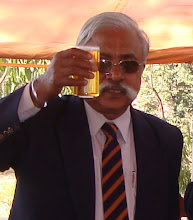
Col Ravi Nair is a soldiers soldier. He draws on his vast frontline experiences to vividly portray the trials and tribulations of soldiering. This blogpost revisits his experiences as a Commanding Officer in Sri Lanka during the turbulent civil war when the Indian Army was deployed in that country. Suddenly, faced with a grave situation, he is required to take decisions that are conflicting and fraught with grave consequences. How he deftly navigates this quagmire, protecting the honour of his command, 'Naam, Namak and Nishaan', while at the same time ensuring that justice and fair play is not denied to the affected soldiers, is worthy of deep appreciation and emulation.
ReplyDeleteA great and absorbing read, written with considerable flair and a style of his own. Looking forward to more from his pen.